Ever since a child I have always been in awe of Jeannie Baker's collage illustrations. I recently went to an exhibition of her book Mirror at the State Library of WA, and now I am even more in love and inspired. The detail, texture, relief and beauty in each of her collages is incredible. She researches and explores the landscapes she creates, collecting soil, plants, fabric, feathers, anything to build the image. The patience required to create something so intricate and detailed! If you are in Perth, go and see her work, it is even more incredible seeing the originals. The exhibition runs until the 28th of September.
Showing posts with label book. Show all posts
Wednesday, July 25, 2012
Wednesday, March 7, 2012
vintage japanese illustrators
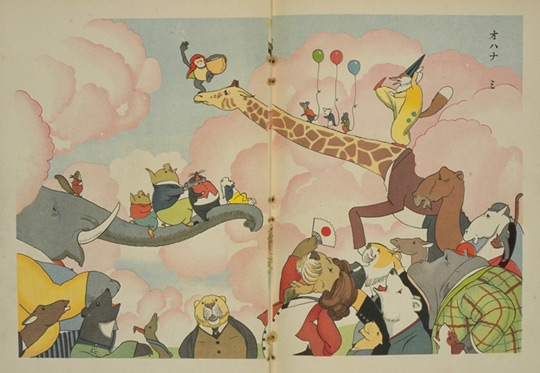
Kodomo no kuni is a Japanese childrens picture book magazine published in the early 1920's. The magazine was created to support the education of young children focusing on art, music and games. The illustrations are a beautiful mix of the modern technologies that marked this era with the whimsical and playful imagination for children.
The Insect Journey Kawakami Shiro 1927
Thursday, January 5, 2012
alice melvin
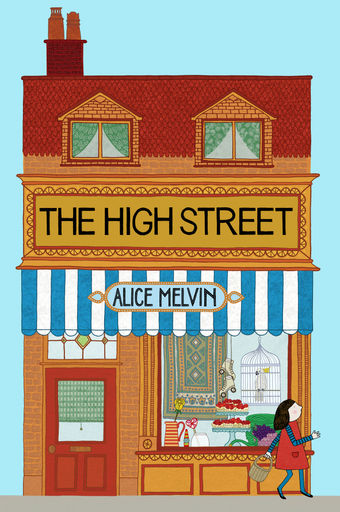
Alice Melvin is an Edinburgh illustrator. She creates beautiful images and prints using rich colours and detailed patterns. I came across her work a few years ago at the Tate book shop in London and bought her Cut Out and Make Menagerie. It has been sitting in a box of beautiful things I've collected over the years and is something I must take out and make with the girls. I also recently came across her children's book The High Street, a book about a young girl going to the shops with her shopping list. I could spend hours looking at the beautiful detail in each of the shops. Have a look at her website for many more Alice Melvin creations.
Sunday, August 1, 2010
Ot en Sien
Ot en Sien (Otto and Francine) is a series of children's stories set in Drenthe in the early 1900's about the daily life of two Dutch children growing up next door to each other. The stories written by Hendricus Scheepstra are inspired by Jan Ligthart's idea of showing young people what was considered a "healthy daily family life". The stories however, portray an idealistic version of what life was considered it should have been, rather than the impoverished provence Drenthe actually was. During the first part of the twentieth century, the stories of Ot en Sien were extremely influential in elementary school education as a teaching tool for reading. Generations of children in The Netherlands have grown up with the stories of Ot en Sien.
When Mum emigrated to Australia she brought these hand sculpted clay figurines and a book illustrated by Cornelis Jetses. They are something I have strong memories of playing with as a child. Ot en Sien are a definite reminder of childhood.
Wednesday, May 19, 2010
story time : the quangle wangle's hat, edward lear
On top of the Crumpetty Tree
The Quangle Wangle sat,
But his face you could not see,
On account of his Beaver Hat.
For his Hat was a hundred and two feet wide,
With ribbons and bibbons on every side,
And bells, and buttons, and loops and lace.
So that nobody ever could see the face
Of the Quangle Wangle Quee.
The Quangle Wangle sat,
But his face you could not see,
On account of his Beaver Hat.
For his Hat was a hundred and two feet wide,
With ribbons and bibbons on every side,
And bells, and buttons, and loops and lace.
So that nobody ever could see the face
Of the Quangle Wangle Quee.
The Quangle Wangle's Hat is a story of total nonsense, which at the same time seems to make a lot of sense, with its many layers of meaning and illusion. This whimsical poem was written by Edwar Lear, a Victorian author, poet and artist. It was first published in 1877 in his book Laughable Lyrics: Fourth Book of Nonsense Poems, Songs, Botany, Music &c.
I love Lear's imagination. His fantasy creatures such as the Fimble Fowl with the corkscrew leg, the Pobble who hast no toes, and my favourite the Dong with a luminous nose.
Lear was born into a family of 20 children, in Holloway England 1812. Financial difficulties left him to his elder sisters care. Raised and educated by his sisters, he then began earning his living as an artist at age 14. He had a difficult life suffering from epilepsy and depression for which he felt ashamed and would often retreat from public view. He was a well travelled man, having explored Europe, Egypt and India. He briefly gave drawing lessons to Queen Victoria. During this Victorian era it was Lear, together with Lewis Carroll, who helped establish this new literary genre of the humorous, irrational and nonsensical. Lear died in 1888 from the heart disease he had been struggling with since 1870.
This tattered edition of The Quangle Wangle's Hat was Will's from his childhood. Published in 1975 by Puffin Books, this version is illustrated by Helen Oxenbury. Oxenbury also illustrated Mem Fox's children's book Ten Little Fingers and Ten Little Toes, another one of my favourite children's stories.
Subscribe to:
Posts (Atom)